One Step Nucleic Acid Amplification (OSNA) Lysate Samples Are Suitable to Establish a Transcriptional Metastatic Signature in Patients with Early Stage Hormone Receptors-Positive Breast Cancer
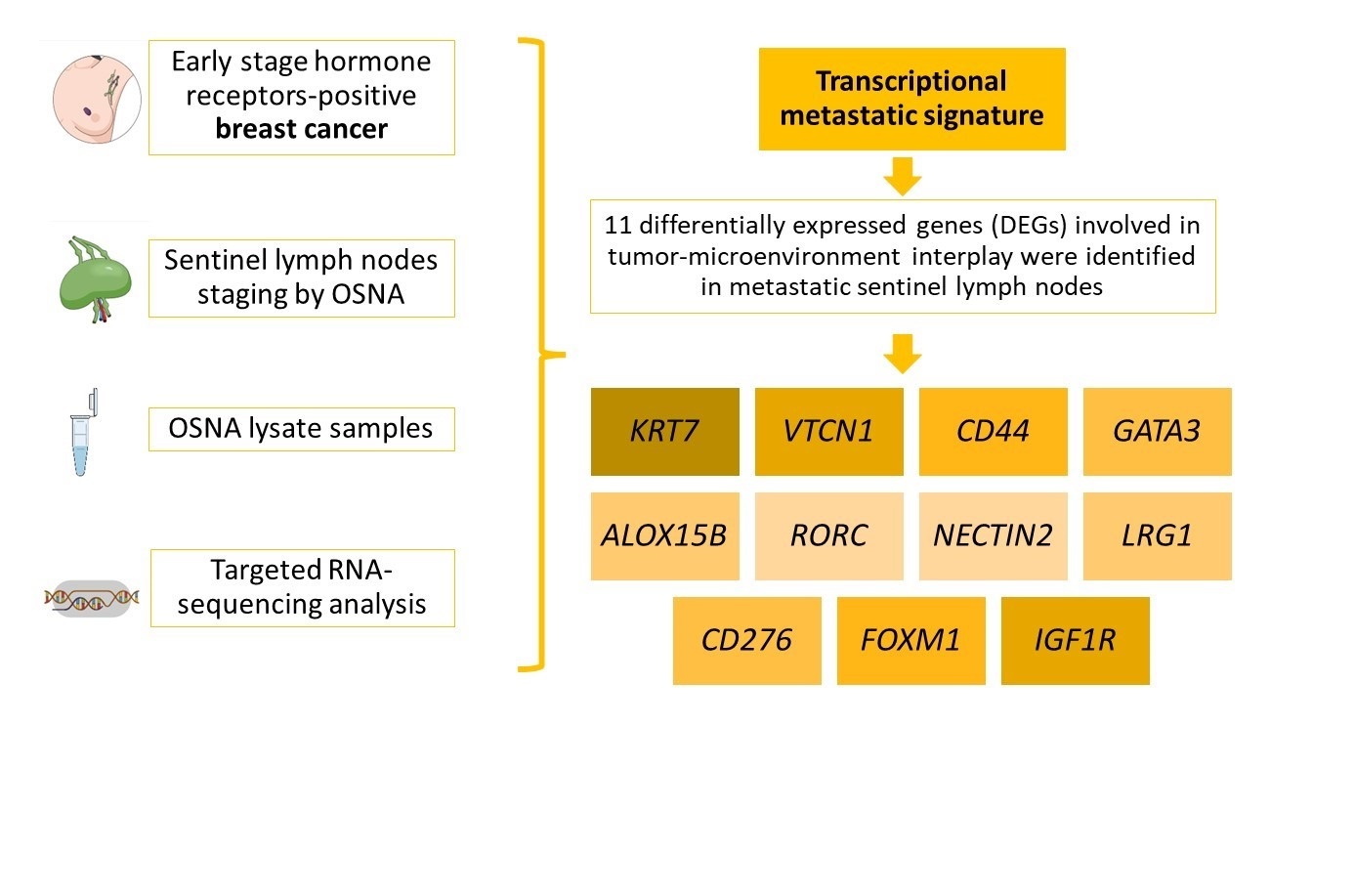
The One Step Nucleic Acid Amplification (OSNA) is a recent technique for sentinel lymph nodes staging in breast cancer (BC). After OSNA assay, instead of being discarded, the residual OSNA lysate can also be used for gene expression studies, being the potentially ideal sample to search for new biomarkers. The aim of our study was to identify biomarkers related to tumor-microenvironment interplay in OSNA lysate of sentinel lymph nodes in women with early stage hormone receptors-positive BC. We identified 11 upregulated genes in metastatic lymph nodes. These genes codify proteins mainly involved in cancer aggressiveness and with impact in immune response. Thus, these findings support that OSNA lysate transcriptomic analysis may identify biomarkers potentially useful in the future for prognosis stratification and therapy selection. As OSNA assay is being implemented for sentinel lymph nodes staging in other cancers, this approach could also have a wider utility.
Authors and Affiliations:
Inês Gante 1,2,3,Joana Martins Ribeiro 4, João Mendes 3,4, Ana Gomes 5, Vânia Almeida 5,6, Frederico Soares Regateiro 3,7,8, Francisco Caramelo 3,9,10, Henriqueta Coimbra Silva 3,4,10 and Margarida Figueiredo-Dias 1,2,3
Related news
Protein Aggregation Patterns Inform about Breast Cancer Response to Antiestrogens
Authors and Affiliations: Inês Direito1, Liliana Monteiro1, Tânia Melo2, Daniela Figueira1, João Lobo3,4,5, Vera Enes1, Gabriela Moura1, Rui Henrique3,4,5, Manuel A. S. Santos1, Carmen Jerónimo3,4,5, Francisco Amado2, Margarida Fardilha1 e Luisa A. Helguero1 1 iBiMED—Institute of Biomedicine, Universidade de Aveiro, 3810-193 Aveiro, Portugal; 2 LaQV-REQUIMTE—Associated Laboratory for Green Chemistry of the Network of Chemistry and…
Principles of Successful Patient Involvement in Cancer Research
From September to December 2020, over 130 contributors from 16 countries across Europe2 came together in a bottom-up process3 to collect and discuss basic principles for successful patient involvement. They represented patient organizations, cancer research, participatory research, medical and healthcare professions, industry, research management, funding organizations and the policy-making level. When collecting these principles, the…
vCPP2319 interacts with metastatic breast cancer extracellular vesicles
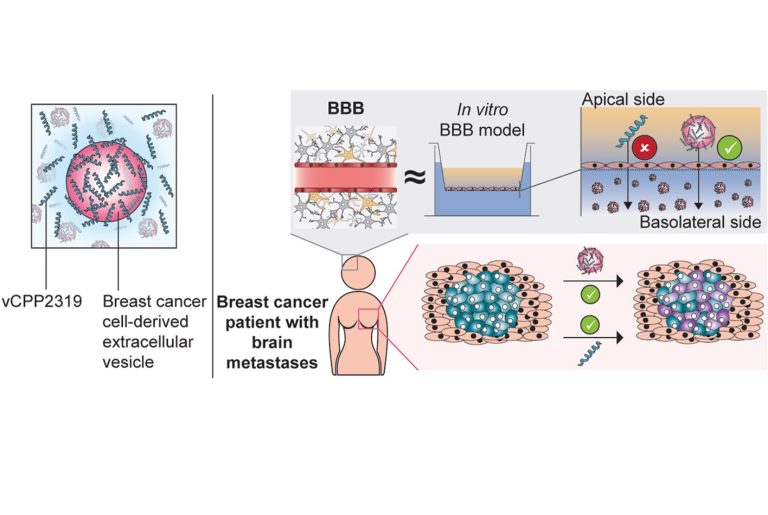
vCPP2319 interacts with metastatic breast cancer extracellular vesicles (EVs) and transposes a human blood-brain barrier model. Authors and affiliations:Filipa D. Oliveira (a), Marco Cavaco (a), Tiago N. Figueira (a), Patrícia Napoleão (a), Javier Valle (b), Vera Neves (a), David Andreu (b), Miguel A.R.B. Castanho (a) (a) Gulbenkian Institute for Molecular Medicine, Faculdade de Medicina da…
Unveiling the mechanism of action behind the anti-cancer properties of cannabinoids in ER+ breast cancer cells: Impact on aromatase and steroid receptors
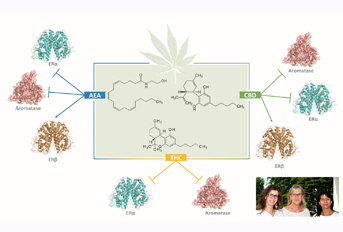
Authors and Affiliations: Cristina Amaral, Fabien Marc Trouille, Cristina Ferreira Almeida, Georgina Correia-da-Silva, Natércia Teixeira UCIBIO.REQUIMTE, Laboratório de Bioquímica, Faculdade de Farmácia, Universidade do Porto Abstract: Breast cancer is currently the leading cause of cancer-related death in women worldwide. Despite the therapeutic efficacy of the current treatments used in clinic, most of the drugs cause…
Discovery of a multi-target compound for the treatment of breast cancer ER+
Authors and Affiliations: Cristina Ferreira Almeida1, Natércia Teixeira1, Ana Oliveira2, Tiago V. Augusto1, Georgina Correia-da-Silva1, Maria João Ramos2, Pedro Alexandrino Fernandes2, Cristina Amaral1 1 UCIBIO.REQUIMTE, Laboratory of Biochemistry, Department of Biological Sciences, Faculty of Pharmacy, University of Porto, Rua Jorge Viterbo Ferreira, n° 228, 4050-313 Porto, Portugal 2 LAQV.REQUIMTE, Computational Biochemistry Group, Department of Chemistry…
RANK pathway inhibition sensitizes triple-negative breast cancer to CDK4/6 inhibitors and enhances immune response
This study, led by Sandra Casimiro and Luis Costa from the Oncology Translational Lab at GIMM CARE, part of the GIMM Foundation – Gulbenkian Institute for Molecular Medicine, demonstrates the potential efficacy of a novel therapeutic strategy for triple-negative breast cancer (TNBC) — an aggressive form of breast cancer for which treatment options are largely…